
Safeguarding Gharials to save the Chambal
Using the gharial as a barometer of river health and an umbrella for conservation, we restore its habitats, conserve wildlife, and work alongside the communities that call the Chambal home.
In 2007–08, more than 100 subadult and near-adult gharials died under unknown circumstances in the lower Chambal River — a serious blow to a species that was already Critically Endangered. Worse still, little was known about the life history of these unique crocodilians.
The Gharial Ecology Project was established in 2008 to unravel the secret lives of gharials. Nearing its 20th year, the project is jointly implemented by the Madras Crocodile Bank Trust and the Gharial Local & Global Foundation, and turns two decades of ecological data into evidence-based conservation — for gharials, for the Chambal, and for the people who depend on it.
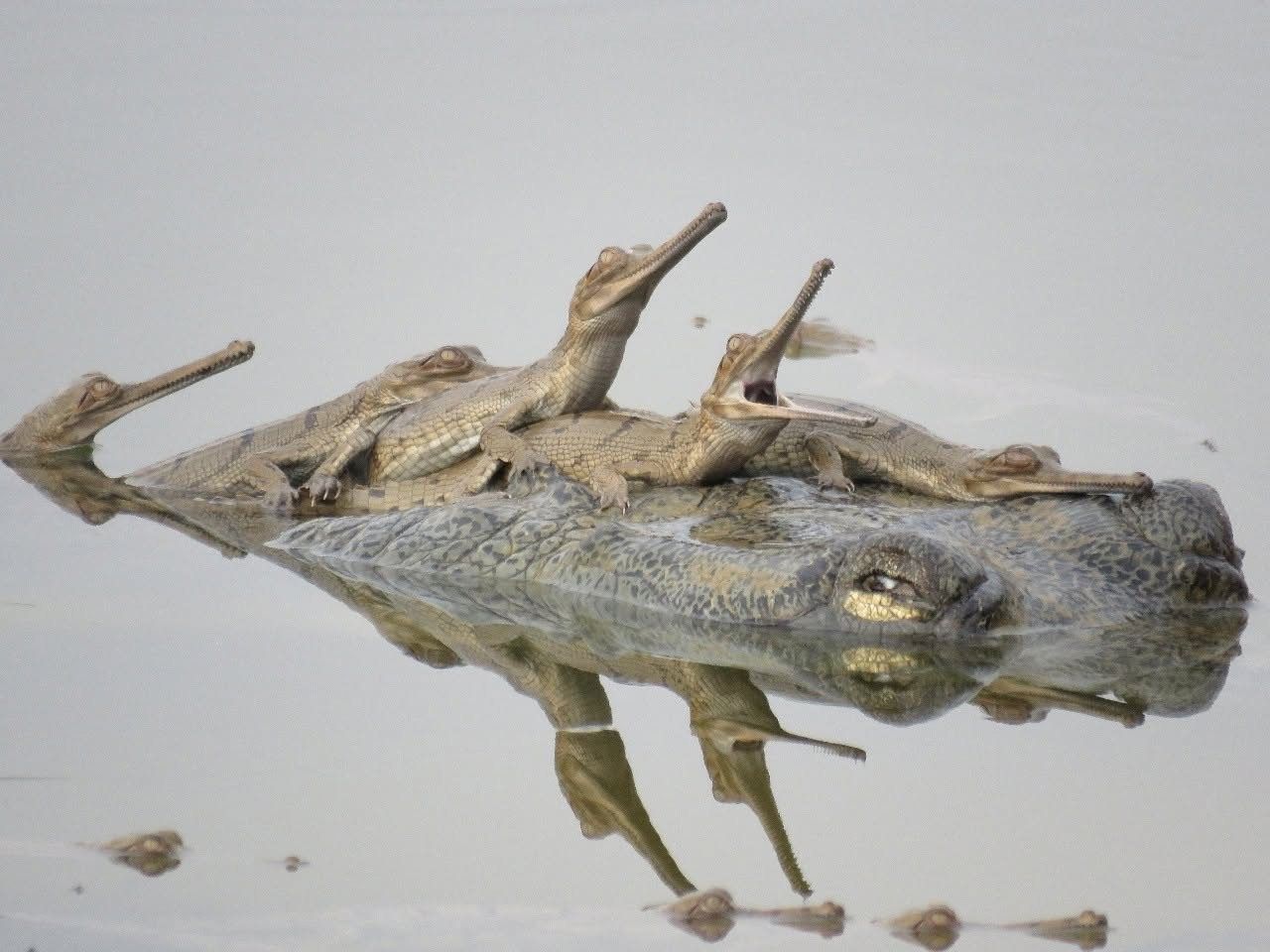
We integrate data from multiple research initiatives to identify the conservation needs of gharials within the Chambal River.
Movement Ecology
Tracking tagged gharials to understand how, when and why they move along the river.
Read more ResearchBehavioural Ecology
Long-term studies of what gharials do — from courtship and nesting to parental care.
Read more ResearchThe Chambal Sandscape
Monitoring the sandbanks gharials need for nesting, from satellites and on the ground.
Read more ResearchGharial Genomics
Two decades of samples, used to assess the genetic health of the largest gharial population.
Read moreConservation needs identified through ecological and genomic studies are implemented in an inclusive framework with local communities and Forest Departments.
Fast-track Head-starting
Rearing young gharials that grow and behave like wild ones, then tracking them after release.
Read more ActionRiver Watch
Local River Watchers protecting a critical 14 km nesting stretch of the upper Chambal.
Read more ActionRegenerative Agriculture
A demonstration farm linking healthier soils and livelihoods with a healthier river.
Read more ActionTranslocations
Moving adult males from the Chambal to restart breeding in the Son River.
Read more ActionKnowledge Sharing
Sharing what we learn with Forest Departments to shape conservation practice and policy.
Read more












Help secure a future for the Chambal’s gharials
Your support funds River Watchers, head-starting, and the long-term science that guides conservation on the river.
Support our work