About Us

Meet the Team

Our Team

Scientists, trackers and river people — most of our field team comes from communities along the Chambal.

Jailabdeen A.

Project Director

Jailabdeen A. holds a master’s in environmental science from Bharathiar University, Coimbatore, Tamil Nadu. This self-professed tech nerd initially worked in media and corporate consulting before taking the plunge into wildlife conservation and research. A native of Tamil Nadu, Jailabdeen chose to work in the Hindi heartland, securing a prestigious EDGE fellowship to expand research on gharials. Over the decade he has been with the GEP, Jai has played a pivotal part in expanding the project and has revealed novel acoustic and chemical communication behaviour in this socially complex crocodilian. Jai seeks to further our agenda of evidence-based conservation within a participatory framework.
Dr Shashwat Sirsi

Project Manager

Shashwat is a Bengaluru-based biologist who has had a passion for herpetology and conservation for as long as he can remember. He holds a PhD in aquatic resources and integrative biology from Texas State University in San Marcos, Texas, and wants to address key knowledge gaps for imperilled species. He has a decade of research experience in Texas, having focused on the conservation of Houston toads and Rio Grande turtles. Shashwat joined the project in 2025 and now aims to use ecological and genetic knowledge to help frame management options for gharials and other aquatic vertebrates in the Chambal.

Raghavendra Kumar

Field Biologist

Raghavendra Kumar, or Guddu, is from a local fishing community on the lower Chambal River. His traditional ecological knowledge of the Chambal and its denizens is a huge advantage in his primary responsibility of tracking radio-tagged gharials and documenting gharial behaviour in detail. The data Raghavendra generates is crucial for our continued understanding of gharials. Raghavendra began a bachelor’s degree in arts but left in his second year to start a photography business catering to weddings in local communities. Since joining us in 2017, part of what he does is wield the camera to document adult breeding behaviour — gharial weddings! Raghavendra is working towards being a self-sufficient researcher, building capacity in data entry and spreadsheet work.

Mahendra Singh

Tracker

Mahendra is our newest recruit and comes from a local agro-pastoral community in the upper Chambal. As a 23-year-old local resident, Mahendra knows the geography and people of this landscape. Under Raghavendra’s wing, he has rapidly honed his ability to spot, observe and track gharials. Mahendra’s assistance to Raghavendra has been crucial in yielding novel insights on yearling gharial movement and survival.

Pankaj Kumar

Consultant Biologist

Pankaj’s father, Jaikishan, a boatman with the Uttar Pradesh Forest Department, worked closely with Dhruvajyoti Basu, sharing all that he knew about gharials. It was little surprise to us when Jaikishan’s son, Pankaj, demonstrated a rich lived and inherited knowledge of the Chambal and its gharials. Pankaj has worked closely with Jeff since the project’s inception and has made immense contributions to our understanding of gharials. He was awarded the Shri Fateh Singh Rathore Memorial Lecture & Conservation Award 2023 by Tiger Watch, in recognition of his exceptional, lifelong dedication to studying and documenting gharials and other wildlife in the Chambal.

Sudesh Singh

Operations Assistant

Sudesh Singh, or Sera, is from a local fishing community on the lower Chambal River. Initially employed to drive our team, we quickly learned that there wasn’t a road Sera couldn’t drive. Sera has grown to be an integral part of our annual gharial catching and tagging operations since 2022. In an increasing roster of duties, Sera is now the lead resource person in implementing our evidence-based gharial rearing project. Sera works hard, and during his downtime he decompresses by honing his cooking skills.

Dr Jeffrey W. Lang

Senior Scientific Advisor

Dr Lang is Professor Emeritus at the University of North Dakota and holds a PhD in ecology from the University of Minnesota. With a storied career unravelling behaviour, physiology and spatial ecology in multiple crocodile and turtle species, Dr Lang also has a long relationship with India. He studied mugger biology in the 1980s at the Madras Crocodile Bank Trust and then helped set up the Gharial Ecology Project in 2008, which has played a key role in the survival and study of the species. He received the Castillo Award for Crocodile Conservation at the 26th Crocodile Specialist Group meeting in Chetumal, Mexico, and more recently the George Amato Award in recognition of his profound impact on gharial conservation in India. Dr Lang’s support and mentorship have been critical to the long tenure of the Gharial Ecology Project.

In the field

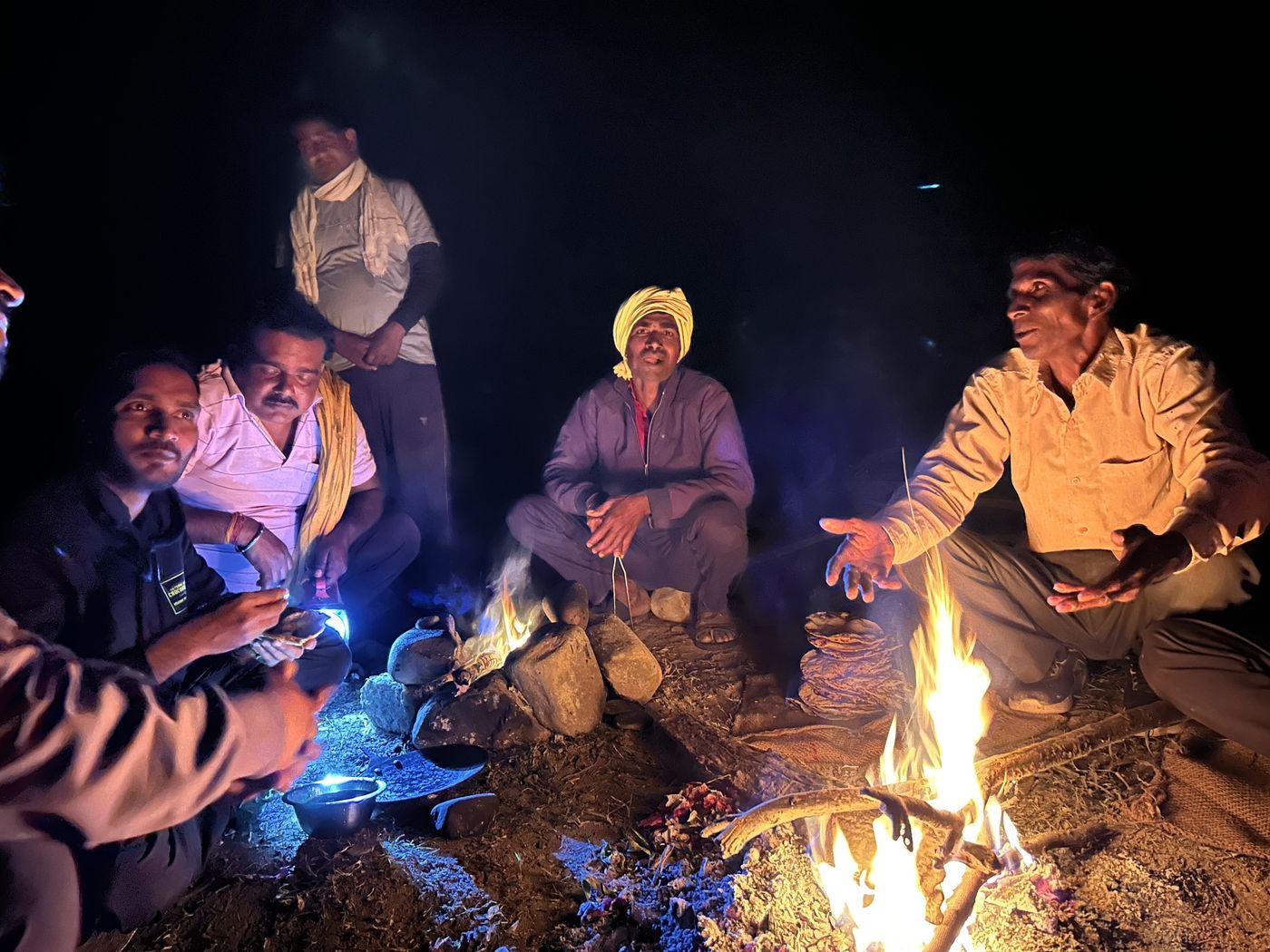
Campfires are an excellent setting for team debriefs during our winter sessions of catching and tagging gharials.
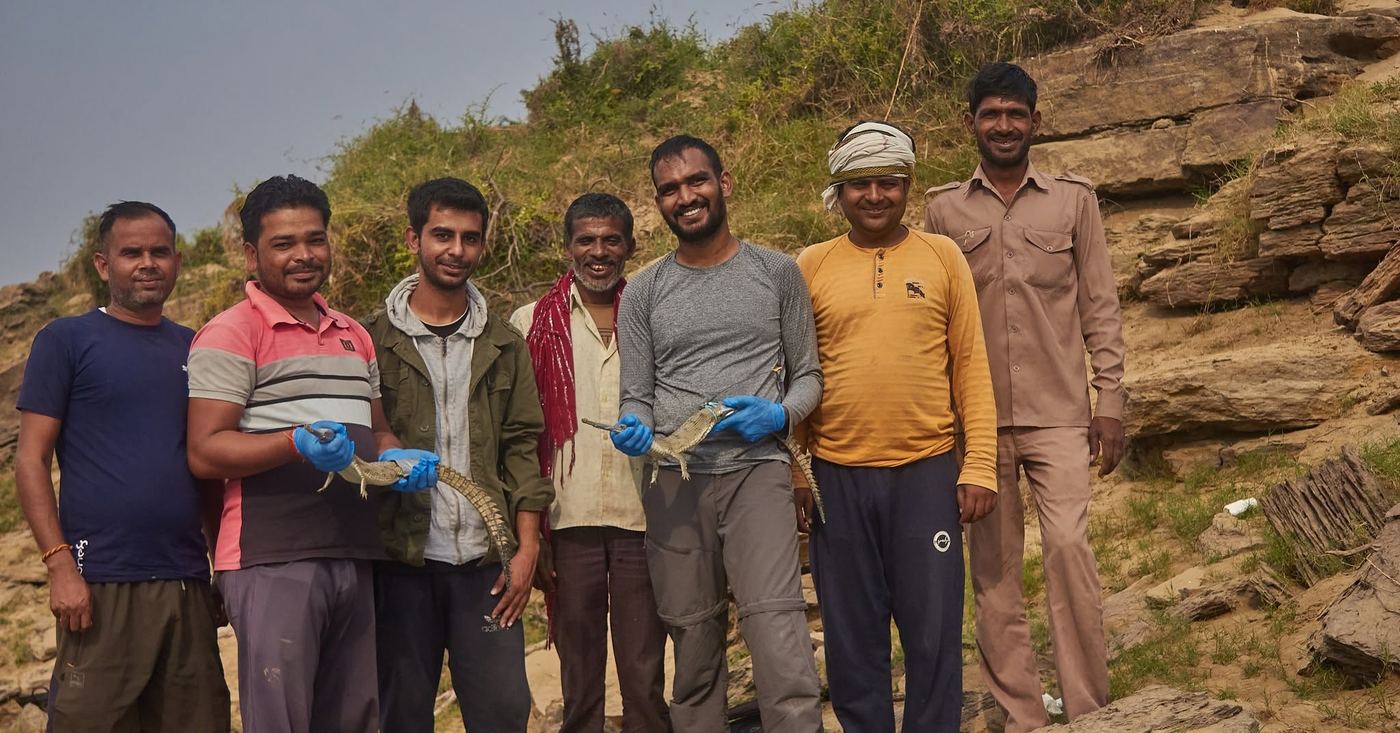
With young gharials before release.
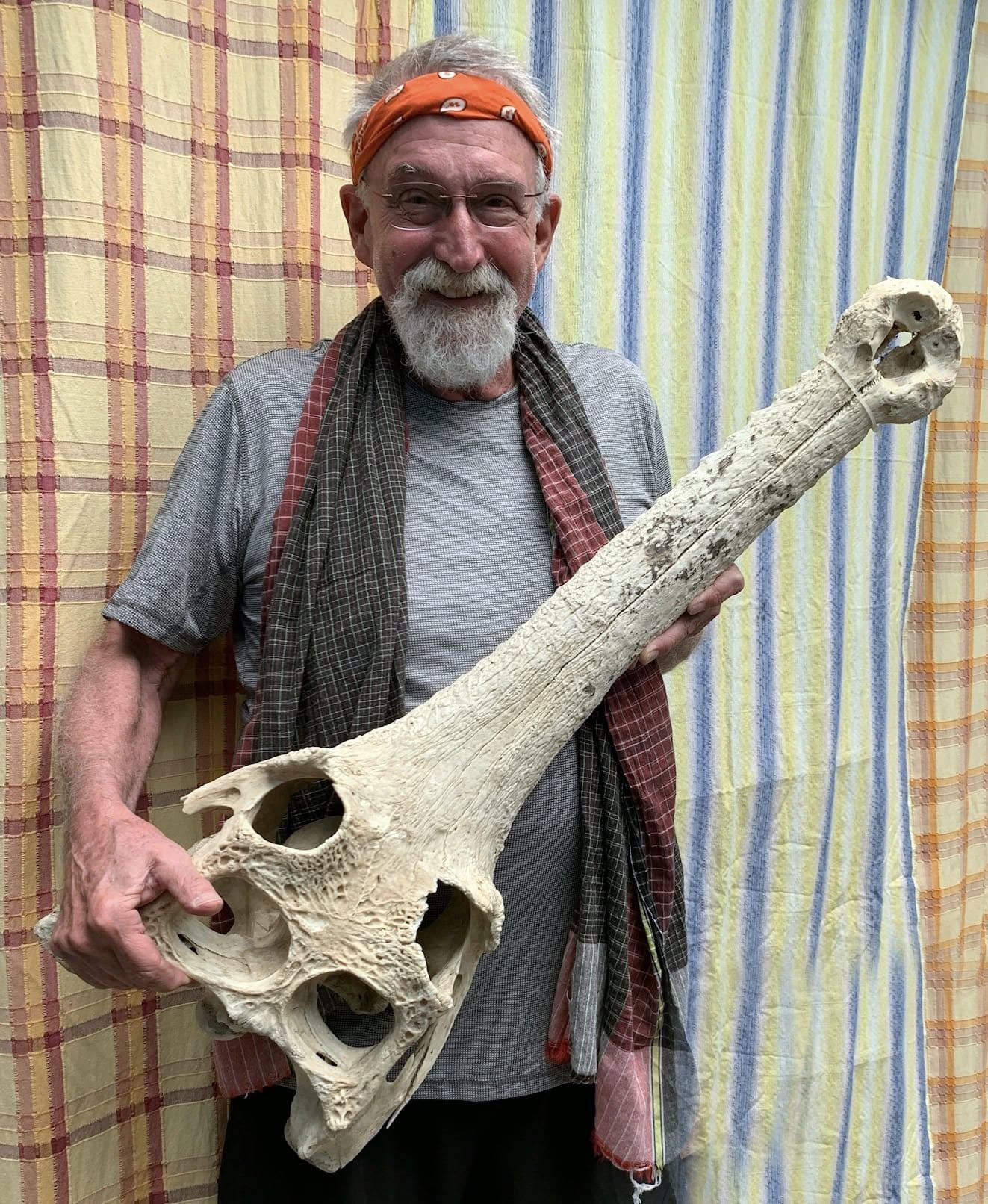
Dr Jeff Lang with a gharial skull.
Advisors & Collaborators

Mentors and research partners who extend what we can learn — and do — for gharials and the Chambal.

Romulus Whitaker

Trustee, Madras Crocodile Bank Trust

Romulus Whitaker is an American-born Indian herpetologist. In 1976 Rom and his former wife Zai Whitaker set up the Madras Crocodile Bank / Centre for Herpetology, now India’s largest reptile conservation, research and education centre. Rom has co-founded a slew of organisations and initiatives that bridge the gap between people and wildlife conservation, including the Gharial Conservation Alliance with Jeff and Basu, which later became the Gharial Ecology Project. Rom has written prolifically and has produced and presented 25 documentary films. His accolades include an Emmy Award, the Whitley Award, the Rolex Award for Enterprise, the Peter Scott Award for Conservation Merit, the Salim Ali Award for Nature Conservation, and the Padma Shri. We are grateful for his continued mentorship, which has contributed significantly to our growth.

Profile ↗

Zai Whitaker

Managing Trustee, Madras Crocodile Bank Trust

Zai Whitaker is a pioneering conservationist. Growing up in a family of naturalists, she developed an early and enduring passion for wildlife and conservation. With Rom Whitaker, she helped establish several organisations and projects, including the Irula Women’s Society and the Madras Crocodile Bank / Centre for Herpetology, where she lives and works as Managing Trustee. Her expertise in conservation, education and outreach is reflected in a long career in school faculty and administrative roles, and in her work as an accomplished author of twenty children’s books on wildlife and the environment, including Andamans Boy, Kali and the Rat Snake, Cobra in My Kitchen, and Salim Mamoo and Me. Her insights have been critical to a long-term vision for gharials and river conservation.

Profile ↗

Kalyan Varma

Filmmaker & Photographer

Kalyan is an Emmy-nominated filmmaker, photographer and conservationist whose work focuses on communicating environmental issues through powerful visual stories. His interests span wildlife and conservation, local communities, and human–wildlife interactions, with a particular focus on the complex relationships between people and the natural world. His films and photography have brought conservation stories to audiences in India and around the world. Kalyan’s mastery of visual storytelling and conservation communication helps translate our work into compelling stories that increase engagement.

Profile ↗

Dr Uma Ramakrishnan

Collaborator · NCBS

Dr Uma Ramakrishnan is a conservation geneticist and evolutionary biologist at the National Centre for Biological Sciences (NCBS), with expertise in using genomic approaches to understand the history, diversity and connectivity of wildlife populations. Her research bridges fundamental evolutionary biology with practical conservation, demonstrating how genetic information can inform the management and long-term recovery of endangered species. She collaborates with the Gharial Ecology Project on genomic studies of gharials, helping to unravel the genetic consequences of historic and recent population declines and informing science-based management recommendations.

Profile ↗

Dr Karthikeyan Vasudevan

Collaborator · CCMB-LaCONES

Dr Karthikeyan Vasudevan is a wildlife biologist and conservation geneticist at the Centre for Cellular and Molecular Biology’s Laboratory for the Conservation of Endangered Species (CCMB-LaCONES). His research combines molecular genetics, population ecology and stable isotope ecology, targeting knowledge gaps for threatened species across India. His partnership with us provides a deeper understanding of gharial populations and the ecological factors shaping them, guiding practical conservation and management decisions.

Profile ↗

Prof. Padmini Pani

Collaborator · JNU

Prof. Padmini Pani is a Professor at the Centre for the Study of Regional Development, Jawaharlal Nehru University (JNU), with deep familiarity with land degradation, river systems, environmental change, and the use of remote sensing and GIS to understand landscape processes. Her research provides valuable insights into the ecological and socio-economic challenges facing the Chambal, particularly the restoration and sustainable management of its degraded landscapes. With the Gharial Ecology Project, she works on understanding the changing landscapes of the Chambal and identifying opportunities for habitat restoration and sustainable floodplain management.

Profile ↗

Dr Saurabh Singh

Collaborator · Hokkaido University

Dr Saurabh Singh is a Postdoctoral Fellow at Hokkaido University, Japan, and an Assistant Professor at Poornima University in Jaipur, Rajasthan. His research integrates remote sensing, machine learning, deep learning and cloud-based geospatial computing to address challenges in climate change, environmental monitoring, disaster risk reduction and sustainable development. He brings advanced geospatial and Earth-observation tools to our work, helping us monitor landscape and habitat change and develop data-driven approaches to protecting the Chambal River ecosystem.

Dr Ritu Sinh

Collaborator · Regenerative agriculture

Dr Ritu Sinh is a former wetland scientist and researcher who has directed her research-oriented approach into permaculture, urban environments and sustainable agriculture, blending formal ecological research with hands-on, community-driven earth restoration. She collaborates with the Gharial Ecology Project to explore regenerative farming methods as sustainable livelihood options for communities along the Chambal — supporting household livelihoods while reducing pressure on the river and its surrounding ecosystems.

Profile ↗
Partners & Supporters
Madras Crocodile Bank TrustMinistry of Environment, Forest and Climate ChangeRajasthan Forest DepartmentMadhya Pradesh Forest DepartmentUttar Pradesh Forest Department
Astral FoundationPrague ZooCrocFestZoo BerlinLos Angeles Zoo
National Centre for Biological SciencesCCMB-LaCONESPoornima UniversityEDGE of ExistenceNational Geographic Photo ArkBerlin World Wild