Our Work

Research Initiatives

We integrate data from multiple research initiatives to identify the conservation needs of gharials within the Chambal River.

Initiative 01

Movement Ecology

Overview

Our project began with the core objective of understanding gharial movement, to offer clues on why more than 100 subadult and near-adult gharials died in 2007–08. The Gharial Ecology Project has since increased the level of detail available on gharial spatial ecology, with a sample size that enables inference on population-level movement patterns.

Implications of our research

  • Gharials are highly mobile
  • Individuals can have seasonal residencies hundreds of kilometres apart
  • Gharials need open, free-flowing rivers for their survival
Movement Ecology
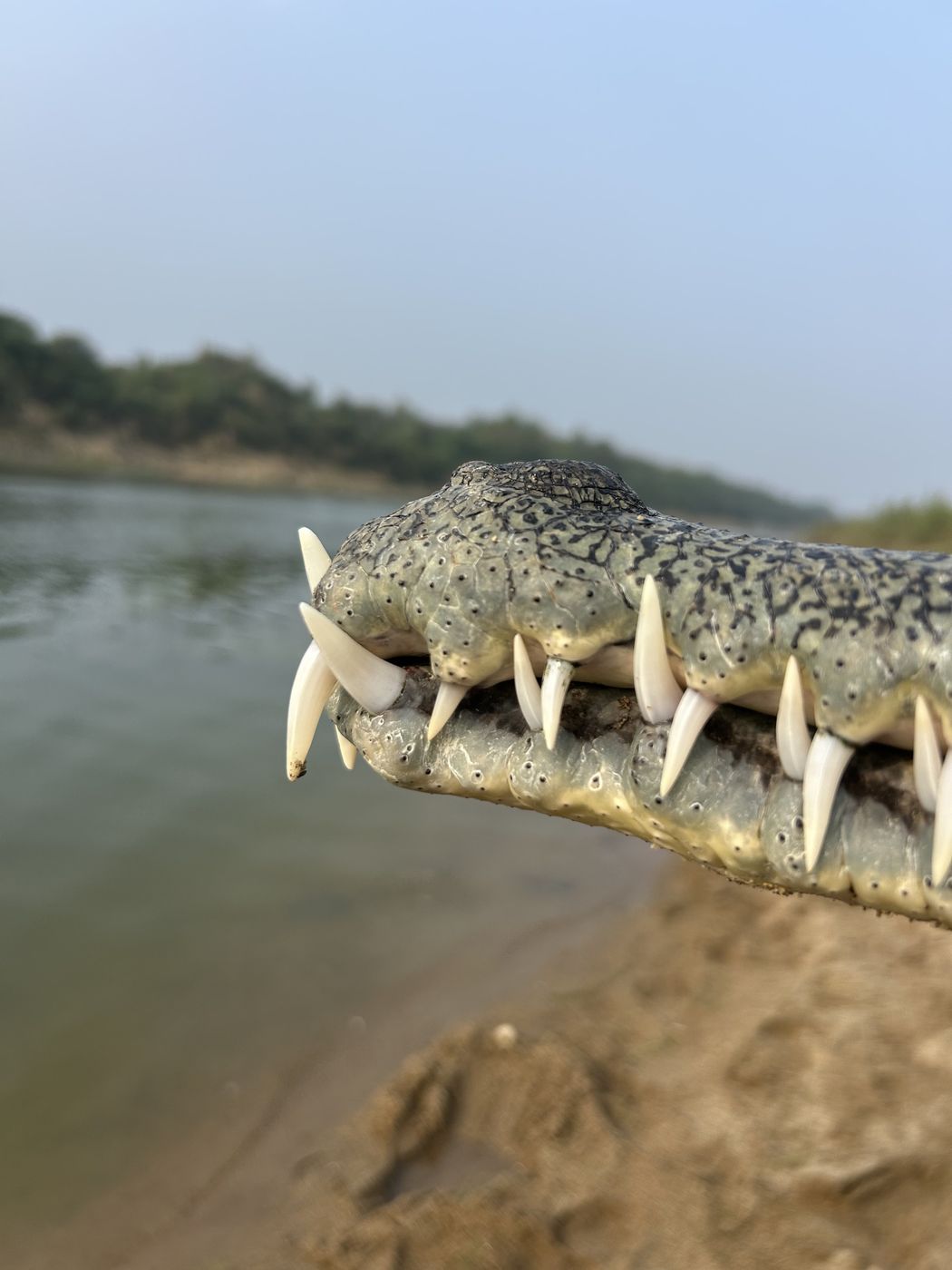
The razor-sharp, interlocking teeth of a gharial can truly be appreciated at close range.
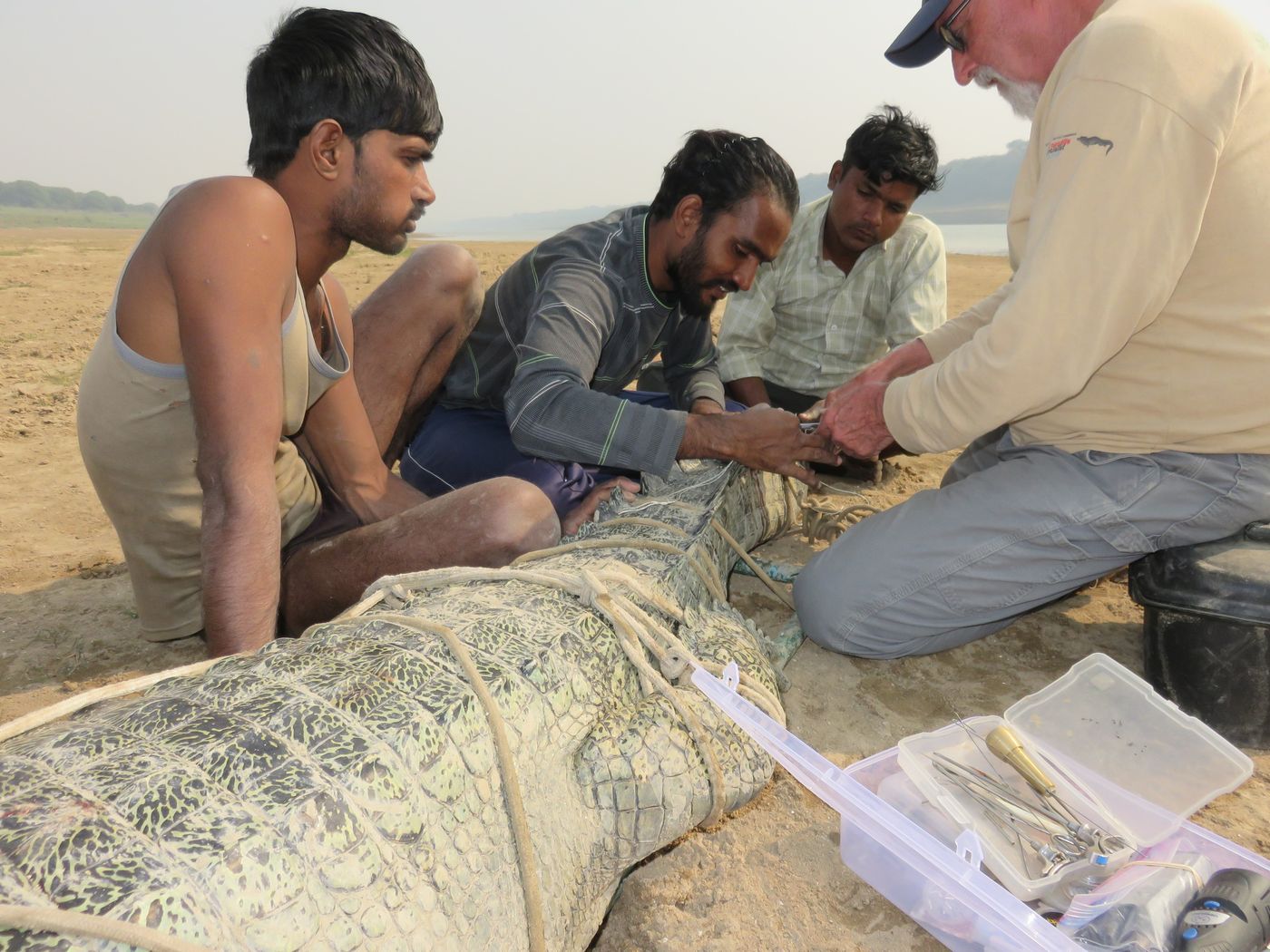
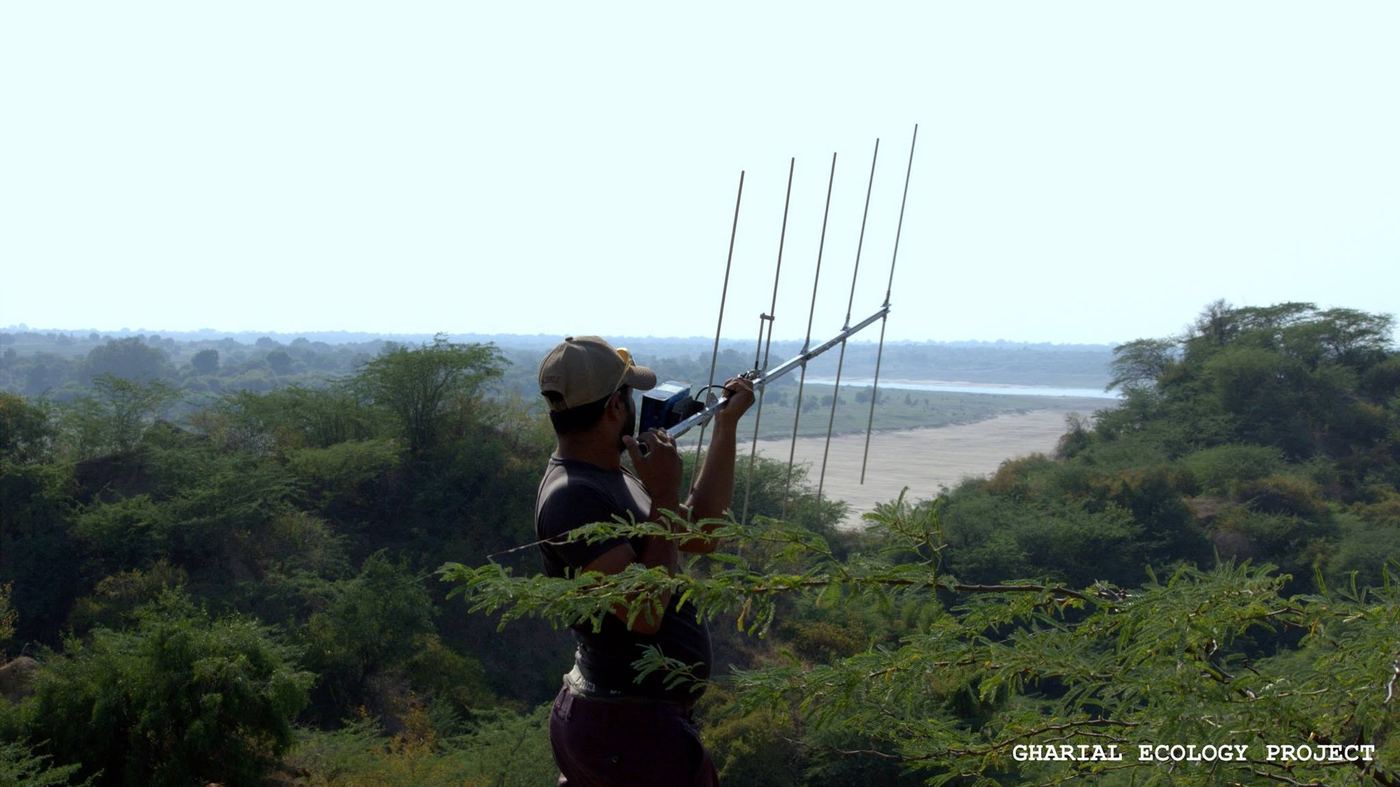
Jailabdeen A. and Dr Jeff Lang tag a wild gharial as field crew members look on with curiosity.
We have observed gharials moving hundreds of kilometres between where they breed and nest in the dry season and where they feed during the monsoon.
Initiative 02

Behavioural Ecology

Overview

Understanding the spatial ecology of an animal requires behaviour data coupled with observed movements. The Gharial Ecology Project has undertaken long-term and detailed behavioural studies of gharials to understand not just where individuals move along the river, but what they do in different river segments at various times of year.

Implications of our research

  • Gharials have a complex social structure
  • Multiple modes of communication likely mediate breeding and nesting behaviours within social groups
  • Maintaining natural behaviour of gharials would promote individual and population-level health
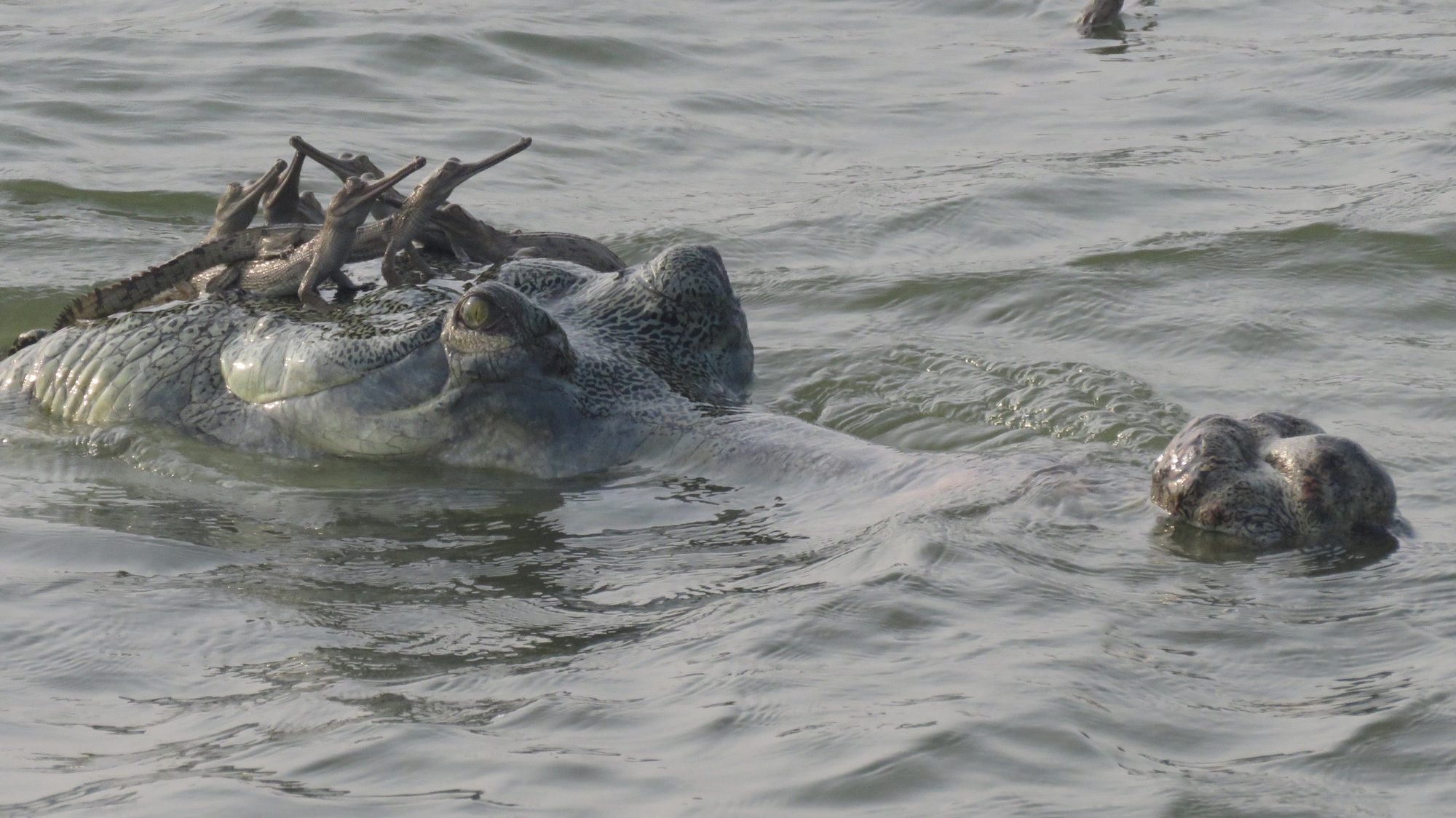
Behavioural Ecology
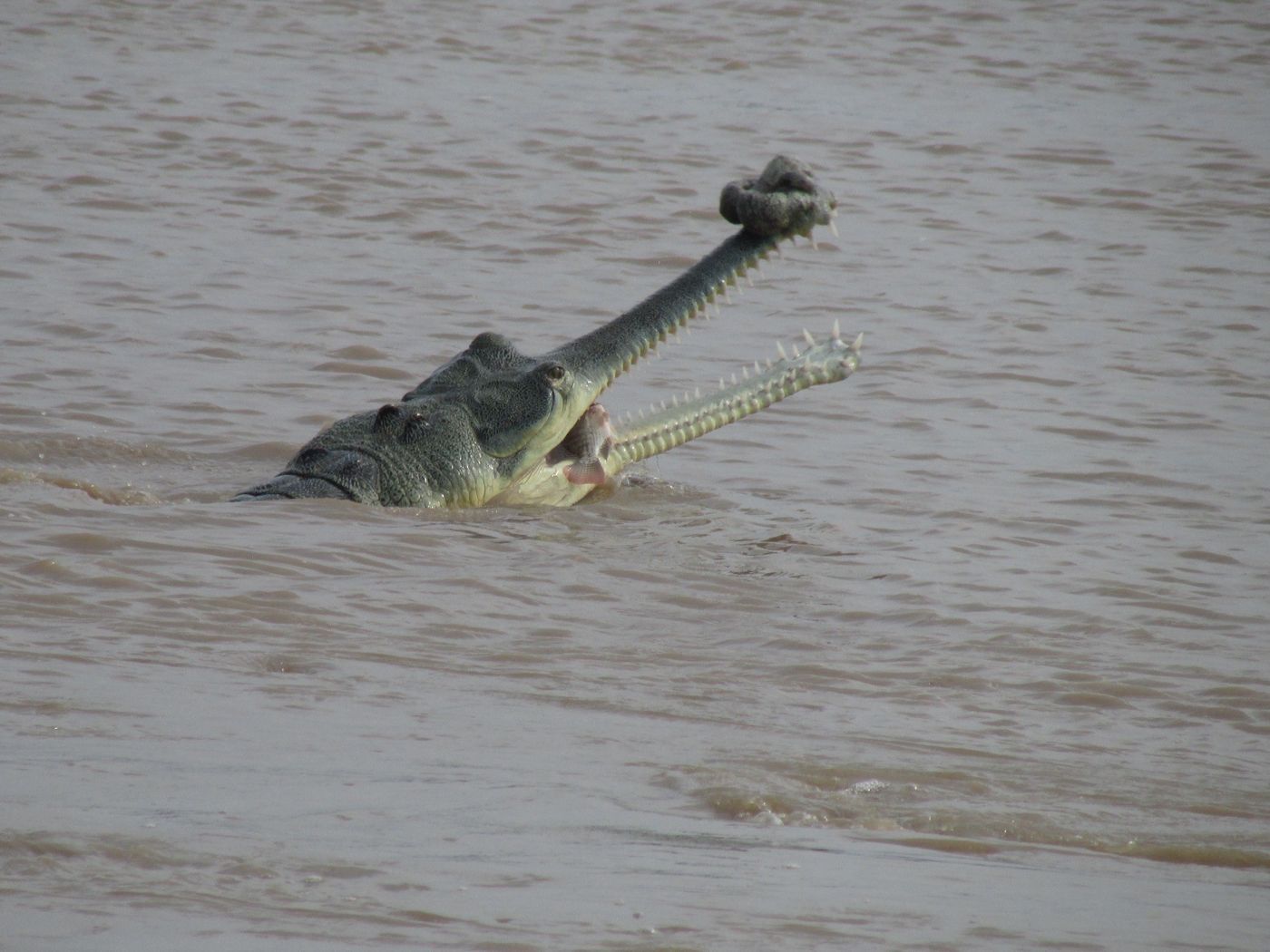
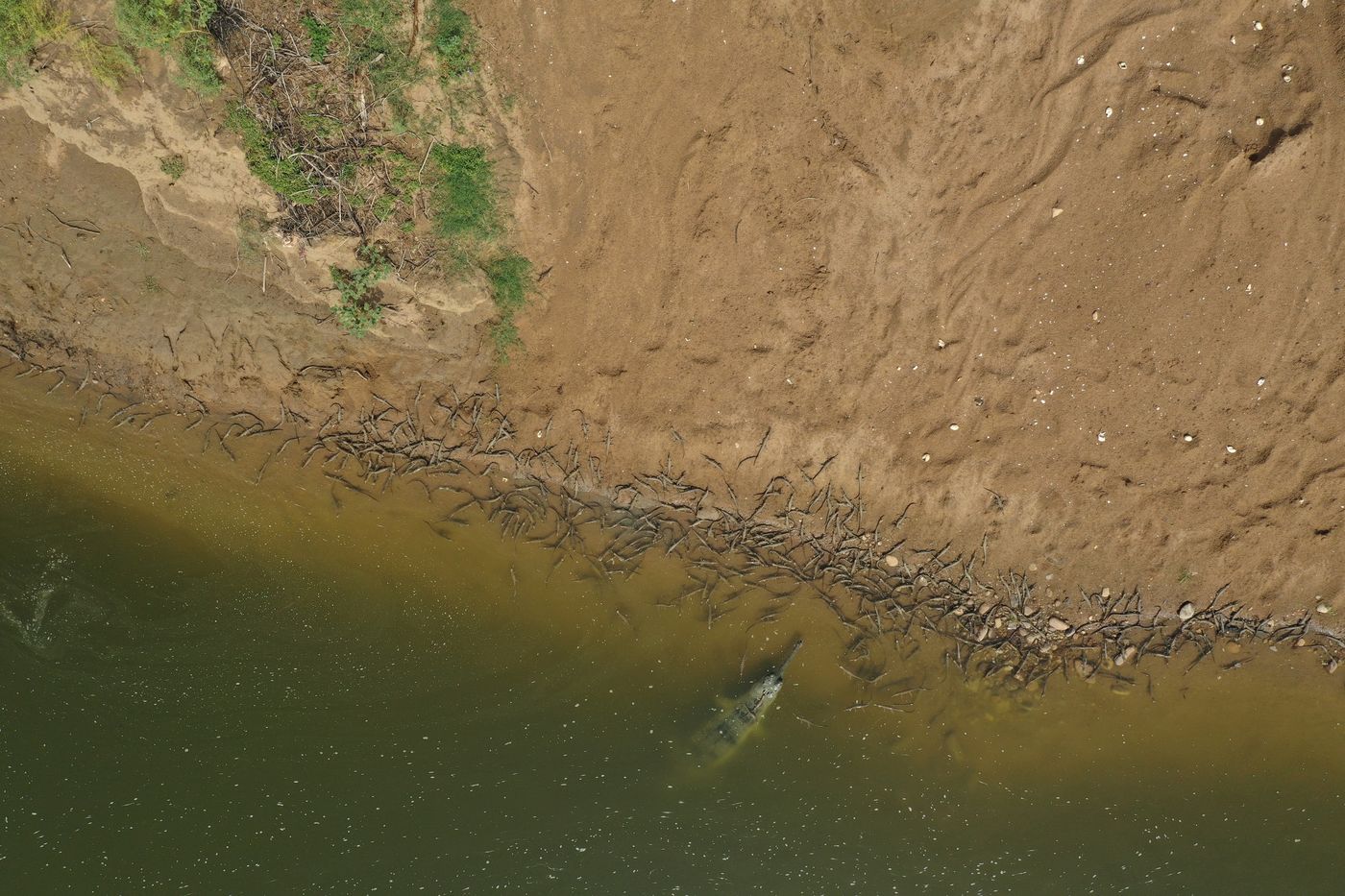
Adult male gharials produce a unique and loud underwater sound known as a POP. Each individual male has a distinct pattern of timing with his POPs.
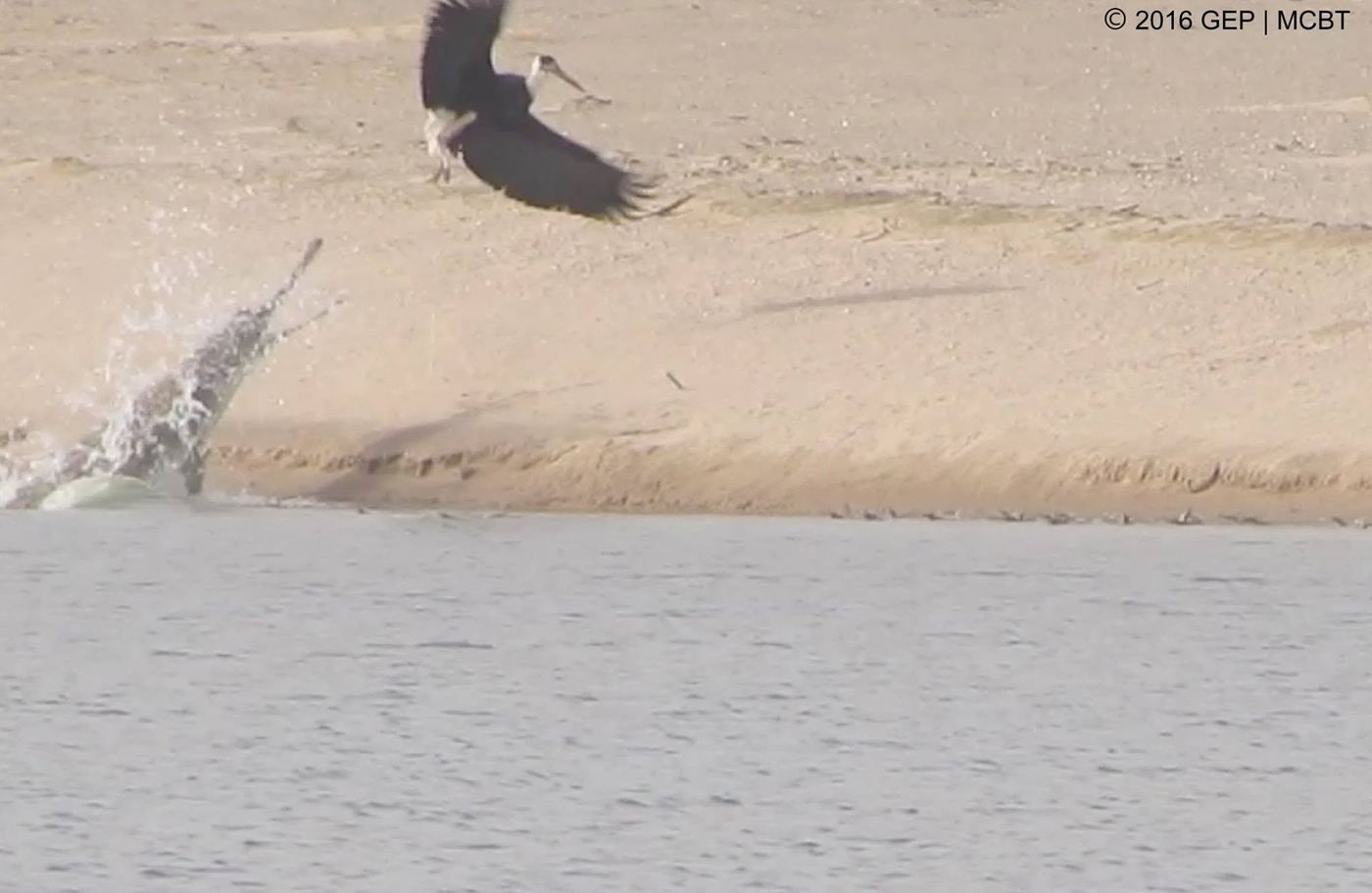
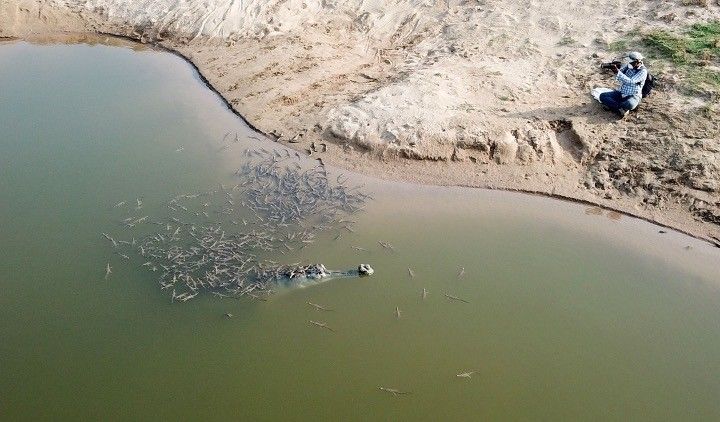
A guarding female leaps at a woolly-necked stork to protect her hatchlings.
Pankaj Kumar observing a male gharial attending to a hatchling crèche. Fine-scale documentation of behaviour is one of our biggest cues to understanding what gharials need to survive.
Initiative 03

The Chambal Sandscape

Overview

The extraction of sand to meet human demand results in the loss of vital habitat that gharials need for reproduction. With expert collaborators, we integrate remotely sensed and direct, on-the-ground observations to monitor the availability of nesting habitat for gharials.

Implications of our research

  • Sand mining is an increasing threat in the Chambal
  • Currently, gharials respond to habitat loss by moving to where habitat is available
  • Changes in habitat availability, coupled with observations on gharial movement and behaviour, help prioritise sites for habitat protection and restoration
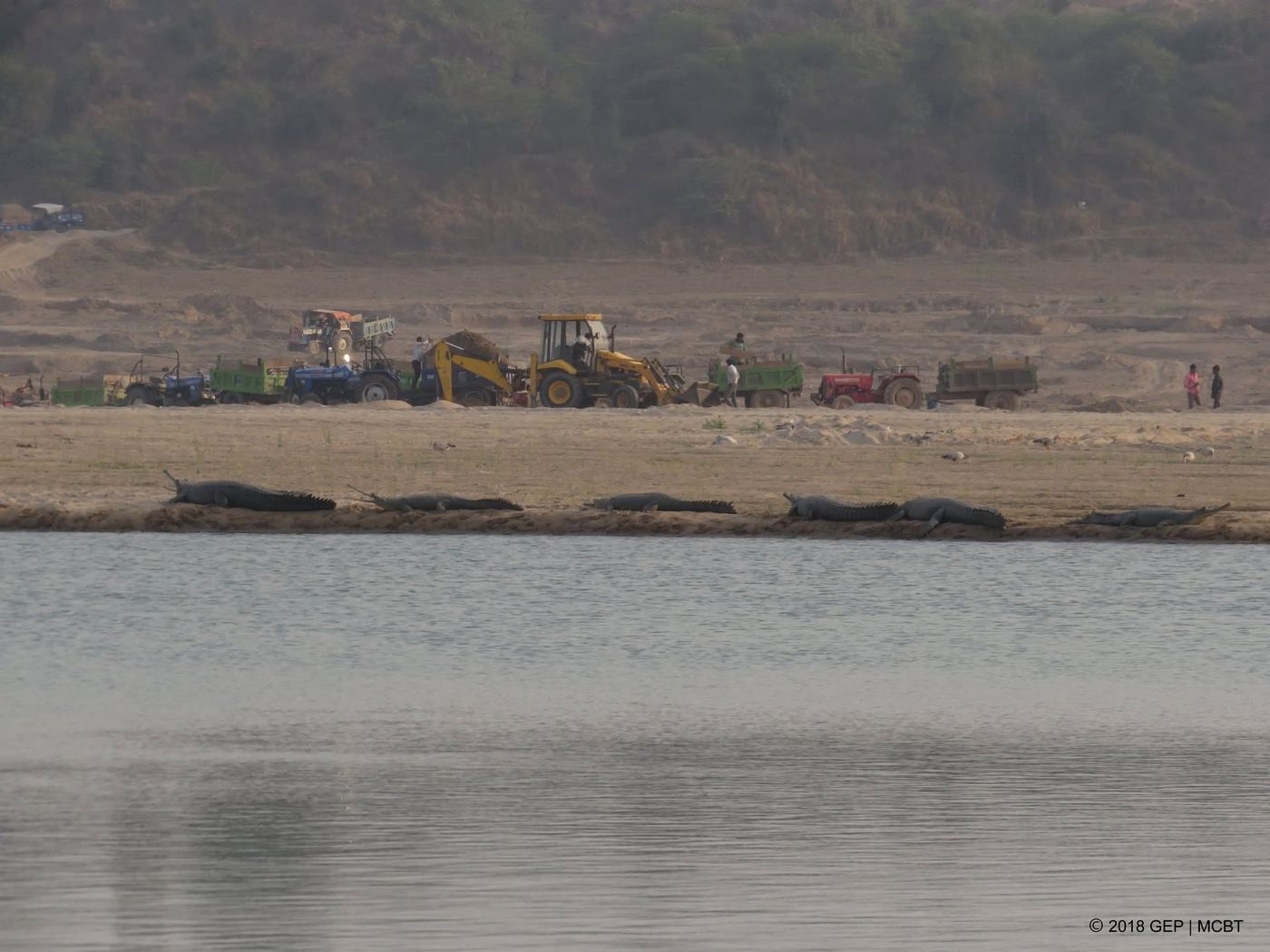
The Chambal Sandscape
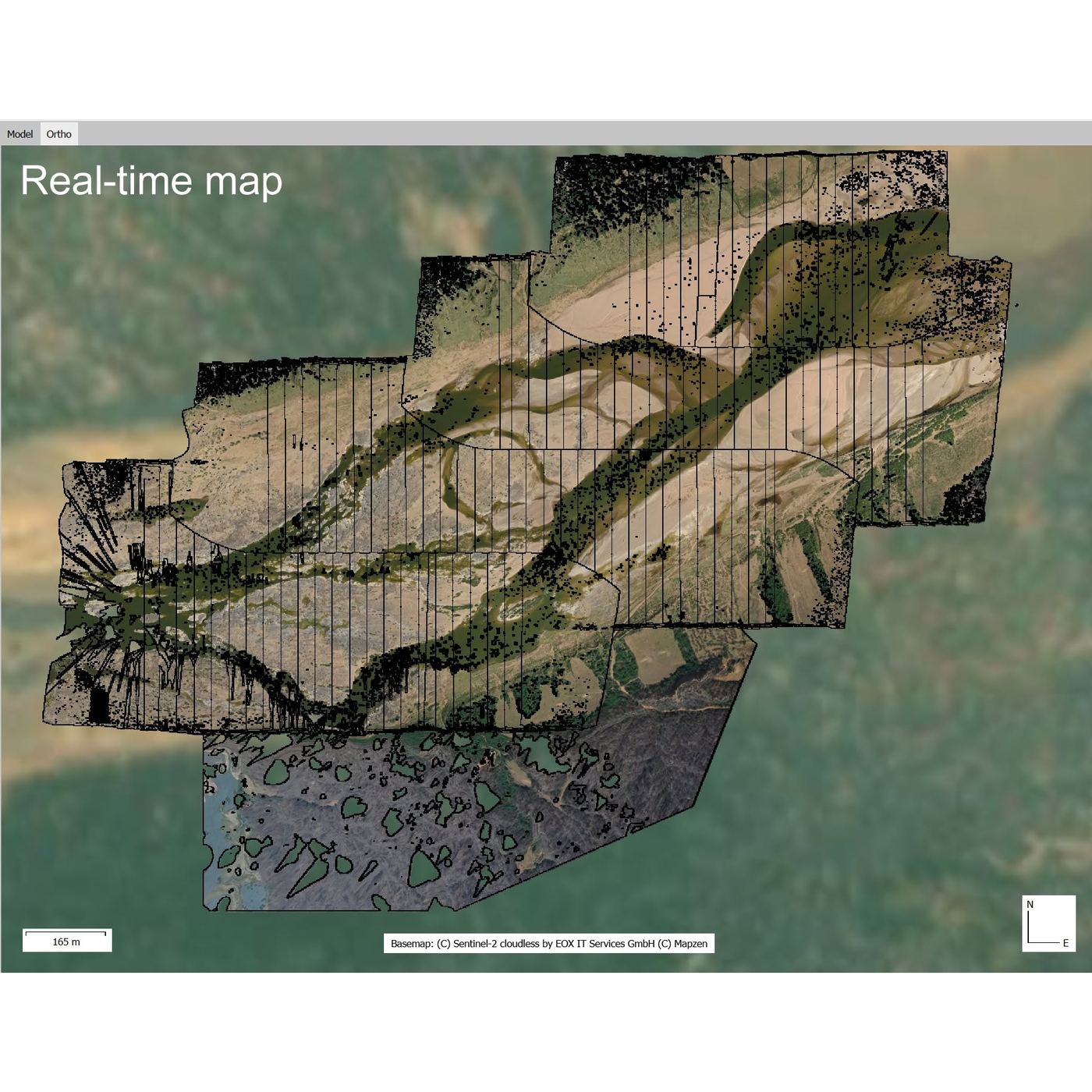
Stitched drone maps track how sandbanks change from year to year.
Data gathered on environmental variables such as sand availability is coupled with observations of habitat use by gharials, to prioritise areas for habitat protection and restoration.
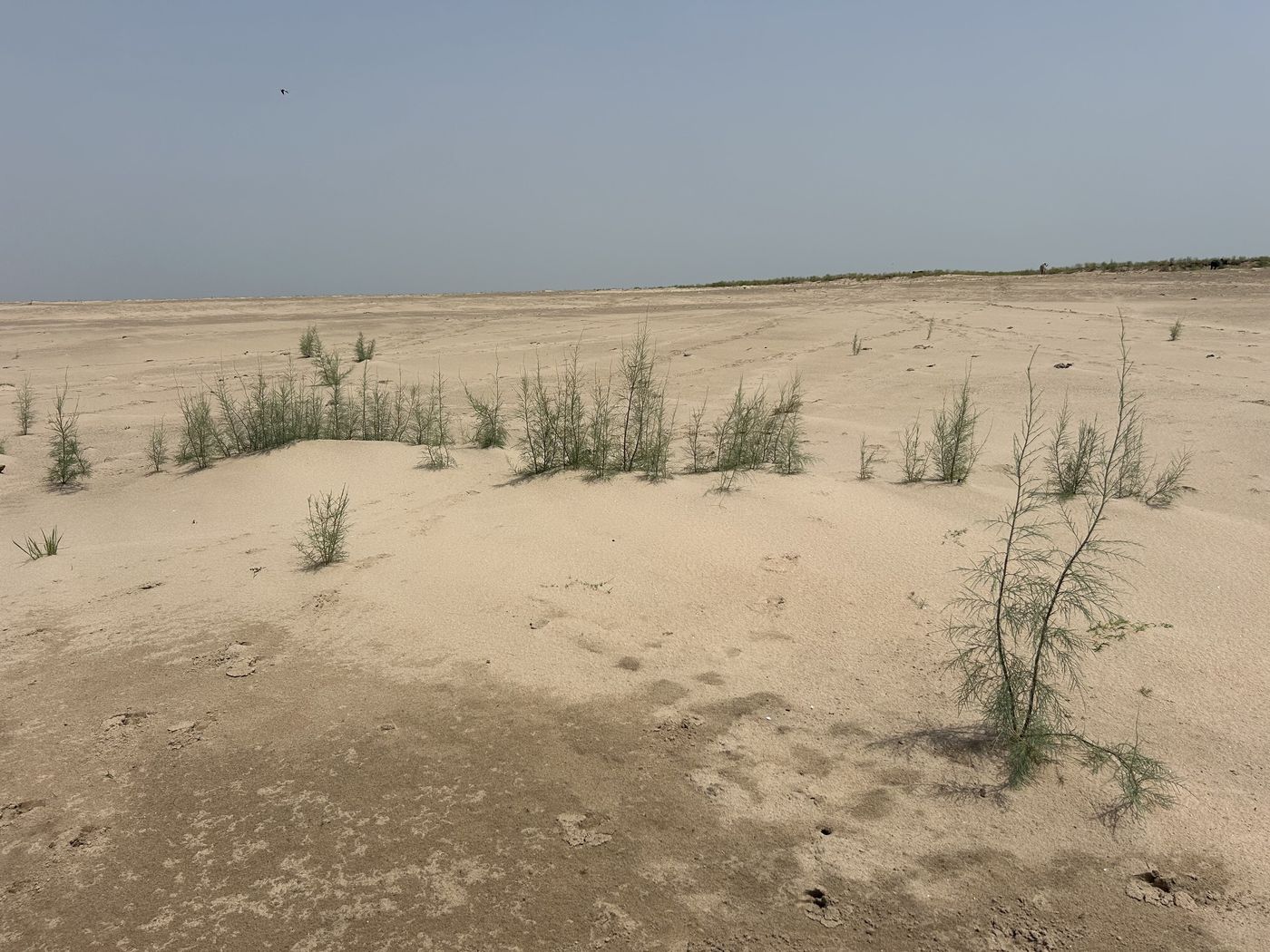
Raised sand profiles at the base of these Indian tamarisk shrubs demonstrate a natural solution to restore degraded sandbanks and mid-river islands.
Initiative 04

Gharial Genomics

Overview

Using samples from individual gharials collected over two decades, we seek to conduct genomic studies of gharials in partnership with the National Centre for Biological Sciences and CCMB-LaCONES.

Implications of our research

  • Genetic health of the largest population of gharials can be evaluated
  • Risk from genetic and demographic factors to gharial persistence can be assessed
  • Actions that minimise demographic and genetic drivers of extinction risk can be prioritised
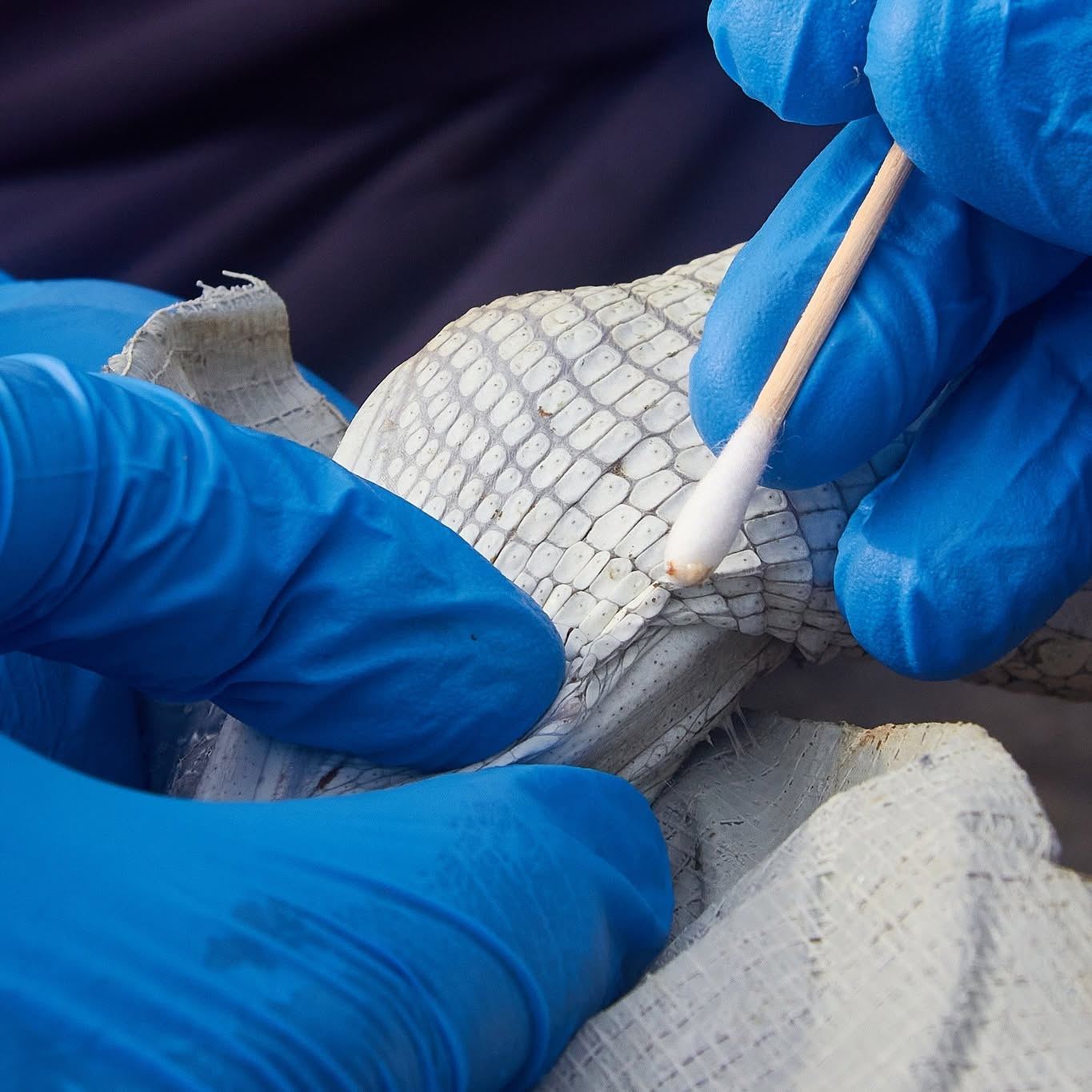
Gharial Genomics
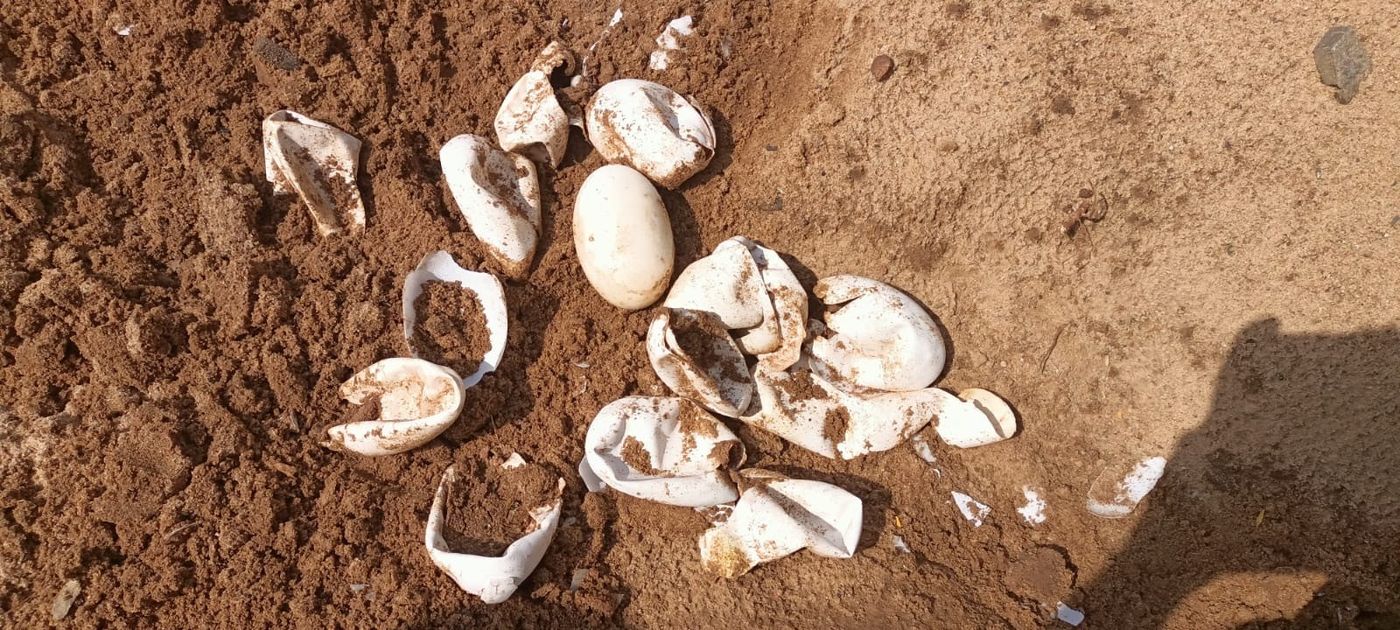
Gharial eggshell membranes offer a non-invasive approach to sample gharials and sequence DNA.
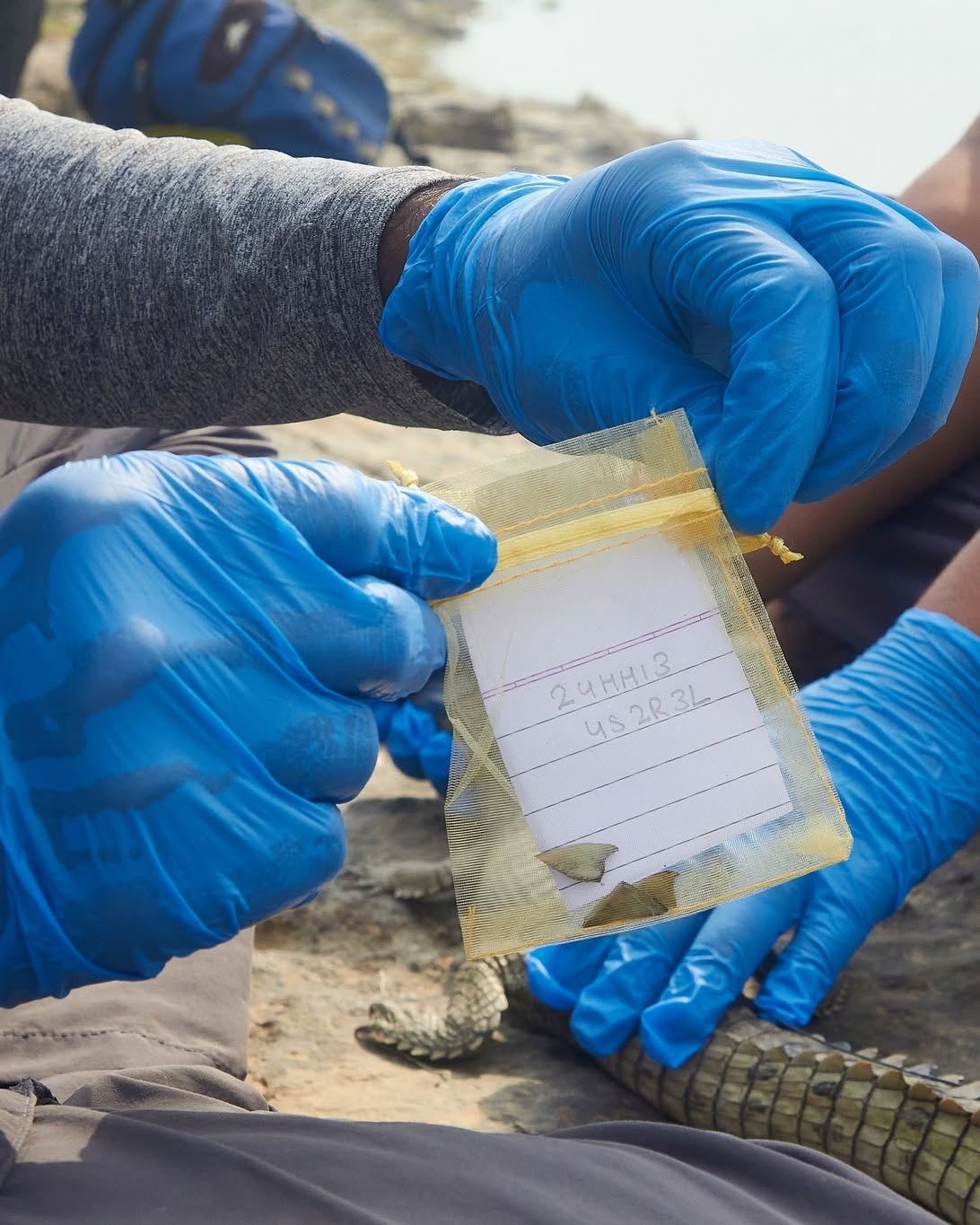
Every sample is labelled and archived for genomic analysis.
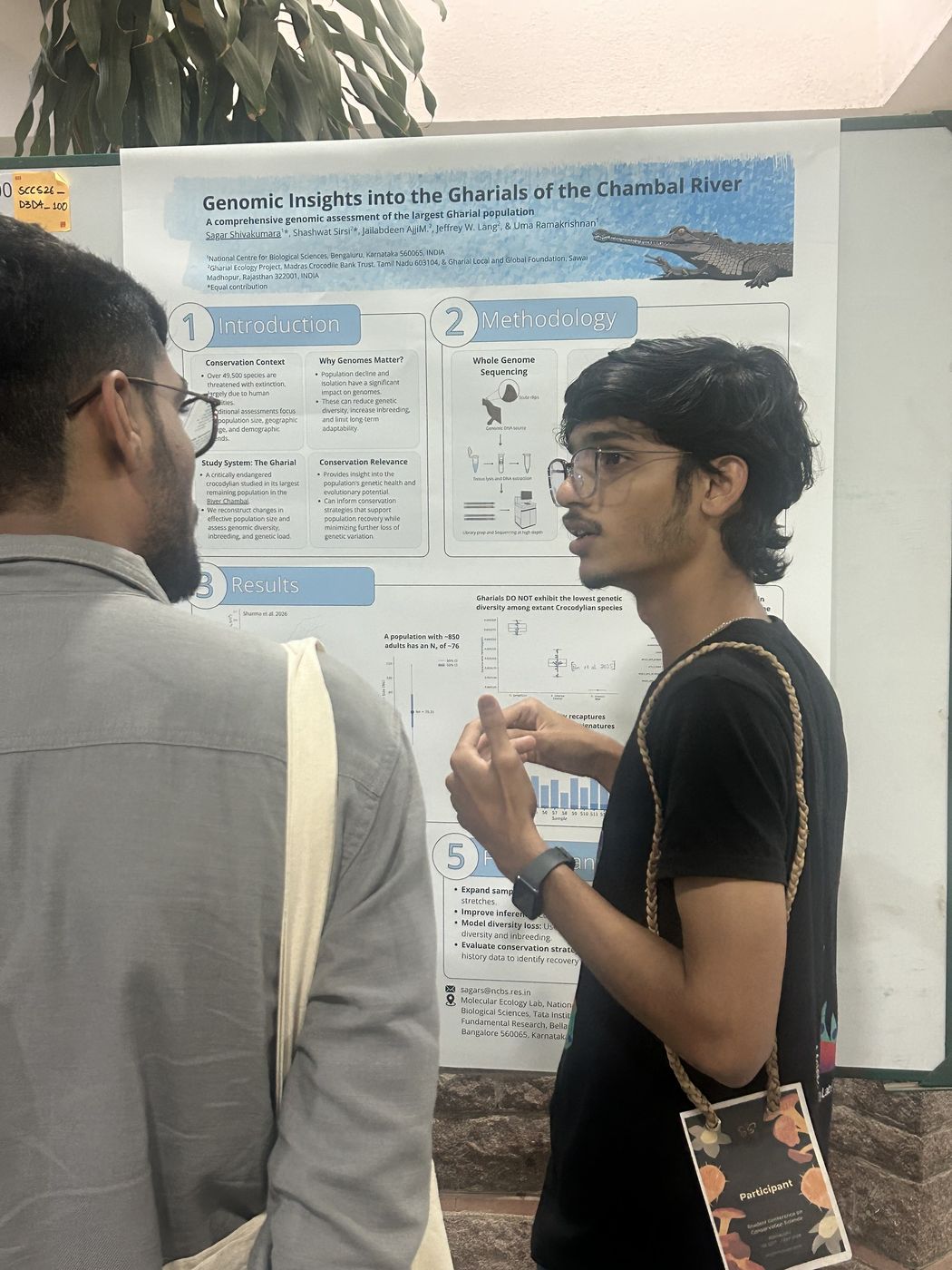
Sagar S., an integrated PhD student in Dr Uma Ramakrishnan’s lab, is assessing the genetic status of gharials in the Chambal River using whole-genome sequences from a representative sample of Chambal’s gharials.